Contact Us
Product

SOLUTION
Browse full water treatment spare parts at Shuitianlan(STL): ultrapure resin series, filtration membrane products, various filter vessels, branded EDI modules, multiple types of UV sterilizers and original imported water pumps for industrial water purification.
ABOUT US
Shuitianlan(STL) is a professional water treatment consumables distributor focusing on membrane, resin, filter, EDI and disinfection products. With stable supply chain and rich project experience, we serve global water engineering companies with cost-effective products & technical support.
Shuitianlan(STL) matches targeted consumable supporting schemes for petrochemical wastewater recycling, food & beverage production pure water, municipal drinking water purification, helping enterprises reduce water treatment operation cost.

Release Shuitianlan(STL)’s latest product supply information, industry policy & technology trends, and sort out common FAQs of membrane, resin, filter operation & maintenance to solve customers’ daily use problems.
Welcome global water treatment engineering merchants, project contractors to contact Shuitianlan(STL) for product quotation, sample application, customized supporting and long-term supply cooperation.

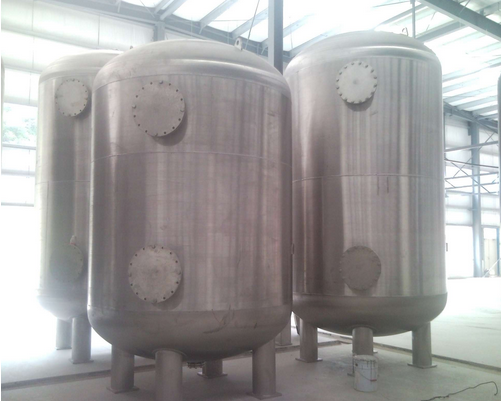
Our factory produces fully‑automatic water‑supply equipment, a top choice for many end‑users. Through years of improvements, this well‑refined unit features an automatic air‑make‑up function. Optional configurations are available to match varying site conditions and user requirements. This equipment boasts a broad scope of application.
Built‑in automatic air make‑up; no separate air‑charging device required.
Capable of replacing elevated water tanks and water towers; prevents water‑quality contamination.
Small footprint, fast on‑site installation; integral transportation is supported.
Simple operation and management, high degree of automation, user‑friendly.
Tap‑water boosting for residential communities, high‑rise buildings, hotels, restaurants, domestic and industrial water‑supply scenarios.
Industrial constant‑pressure water‑supply systems, hot‑ and cold‑water systems.
Retrofit of legacy water‑supply facilities (water towers, pressure tanks, elevated water tanks, etc.).
Fire‑protection systems, pressure‑maintaining and water‑replenishment for heating boilers.
Agricultural sprinkler irrigation, landscape irrigation for parks and gardens, micro‑sprinkling and drip irrigation for vegetable greenhouses, and similar uses.
Our company specializes in manufacturing constant‑pressure water‑supply equipment, non‑negative‑pressure water‑supply equipment and tower‑free water‑supply equipment. We also provide custom‑designed pressure‑vessel equipment and constant‑pressure water‑supply solutions upon request.
Pressure Vessels refer to closed equipment holding gas or liquid under certain working pressure. Storage‑transport vessels, reaction vessels, heat‑exchange vessels and separation vessels all fall under pressure‑vessel categories.
To distinguish pressure vessels from ordinary atmospheric‑pressure vessels, a device qualifies as a pressure vessel only when all three criteria below are satisfied:
Working pressure (Note 1) ≥ 0.1 MPa (gauge pressure, the maximum top‑side pressure under normal operating conditions; liquid hydrostatic pressure excluded).
Inner diameter (maximum dimension for non‑circular cross‑sections) ≥ 0.15 m, volume V ≥ 0.025 m³; product of working pressure and volume ≥ 2.5 MPa‑L (volume means geometric volume of the vessel).
Contents: gas, liquefied gas, or liquid whose maximum operating temperature is equal to or higher than its standard boiling point.
Pressure vessels are widely deployed across petrochemical, energy, scientific‑research, military and many other sectors of national economy. A pressure‑vessel assembly generally consists of six primary components: shell cylinder, end heads, flanges, sealing elements, nozzles and openings, and support saddles. Auxiliary components include safety accessories, instrumentation and internals for specific process functions.
Due to sealing requirements, pressure load and process media, pressure vessels may suffer explosions, fires and consequent hazards to personnel, plant assets and the environment. For this reason, pressure vessels are treated as strictly‑supervised products worldwide, subject to statutory inspection and technical assessment by designated authorities in accordance with national codes and standards.
By pressure rating: low‑pressure vessels, medium‑pressure vessels, high‑pressure vessels, ultra‑high‑pressure vessels.
By contained medium: non‑flammable & non‑toxic; flammable or toxic; highly‑toxic.
By process function: ① Reaction vessels: for physical or chemical reactions of process media. ② Heat‑exchange vessels: for heat transfer between media. ③ Separation vessels: for mass‑transfer, gas‑purification and solid‑liquid‑gas phase separation. ④ Storage‑transport vessels: for storing liquids / gases or providing pressure buffering.
In China’s Supervision Regulation on Safety Technology for Pressure Vessels, pressure vessels are grouped into three categories based on working pressure, medium hazard and process role. Distinct requirements are specified for design, fabrication, inspection items, inspection content and inspection approaches for each category. Imported pressure vessels are subject to compulsory safety‑quality licensing; imports without valid licensing certificates are prohibited.
A pressure vessel shall be classified as Category III if any of the following applies: ‑ High‑pressure vessels; ‑ Medium‑pressure vessels containing media of extreme‑ or high‑toxicity; ‑ Medium‑pressure storage vessels holding flammable or moderately‑toxic media with pV ≥ 10 MPa·m³; ‑ Medium‑pressure reaction vessels holding flammable or moderately‑toxic media with pV ≥ 0.5 Pa·m³; ‑ Low‑pressure vessels containing media of extreme‑ or high‑toxicity with pV ≥ 0.2 MPa·m³; ‑ High‑ / medium‑pressure shell‑and‑tube waste‑heat boilers; ‑ Medium‑pressure glass‑lined pressure vessels; ‑ Vessels constructed from high‑strength materials (specified minimum tensile strength ≥ 540 MPa per applicable standards); ‑ Transportable pressure vessels including railway tank cars (for liquefied / cryogenic media), tank trucks & semi‑trailers (liquefied‑gas, cryogenic‑liquid, permanent‑gas transport), and tank containers for liquefied or cryogenic gases; ‑ Spherical storage tanks with volume ≥ 50 m³; ‑ Cryogenic‑liquid storage vessels with volume > 5 m³.