Contact Us
Product
SOLUTION
Browse full water treatment spare parts at Shuitianlan(STL): ultrapure resin series, filtration membrane products, various filter vessels, branded EDI modules, multiple types of UV sterilizers and original imported water pumps for industrial water purification.
ABOUT US
Shuitianlan(STL) is a professional water treatment consumables distributor focusing on membrane, resin, filter, EDI and disinfection products. With stable supply chain and rich project experience, we serve global water engineering companies with cost-effective products & technical support.
Shuitianlan(STL) matches targeted consumable supporting schemes for petrochemical wastewater recycling, food & beverage production pure water, municipal drinking water purification, helping enterprises reduce water treatment operation cost.
Release Shuitianlan(STL)’s latest product supply information, industry policy & technology trends, and sort out common FAQs of membrane, resin, filter operation & maintenance to solve customers’ daily use problems.
Welcome global water treatment engineering merchants, project contractors to contact Shuitianlan(STL) for product quotation, sample application, customized supporting and long-term supply cooperation.

Based on biological effects, ultraviolet light is classified into UV‑A (320‑400 nm), UV‑B (275‑320 nm), UV‑C (200‑275 nm) and vacuum ultraviolet bands. Water disinfection primarily uses the UV‑C band; wavelengths near 260 nm are proven to deliver the highest germicidal efficiency.
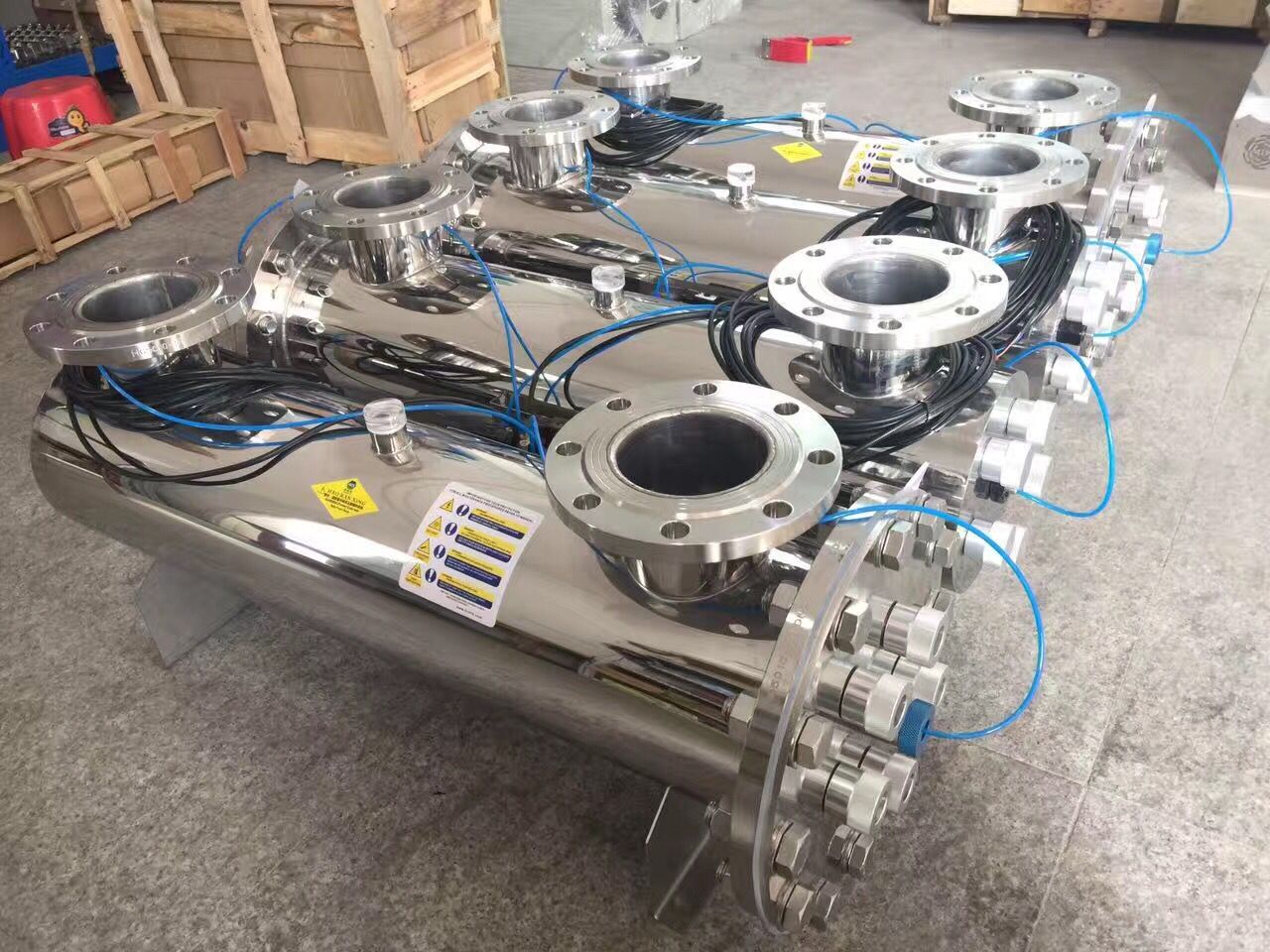
This UV sterilizer integrates optics, microbiology, mechanical engineering, chemistry, electronics and fluid mechanics. Its specially‑designed high‑efficiency, high‑intensity and long‑life UV‑C generator emits strong UV‑C radiation onto flowing water. When bacteria, viruses and other microorganisms in water are exposed to a sufficient dose of 253.7 nm UV‑C radiation, their cellular DNA and structures are destroyed, inhibiting cell reproduction and realizing water disinfection and purification. The 185 nm spectral line decomposes organic molecules in water, generating hydroxyl radicals that oxidize organics into carbon dioxide for TOC removal.
High‑efficiency disinfection: A germicidal rate of 99 %‑99.9 % against bacteria and viruses can normally be achieved within one to two seconds.
Broad‑spectrum disinfection: Ultraviolet light provides one of the broadest disinfection spectra, efficiently killing nearly all types of bacteria and viruses.
No secondary pollution: No chemical agents are added. Neither water bodies nor the surrounding environment suffer secondary pollution, and water composition remains unchanged.
Safe and reliable operation: Conventional disinfection technologies such as chlorination and ozonation employ highly toxic or flammable disinfectants. UV disinfection systems avoid such safety hazards.
Low capital and operating‑maintenance costs: UV equipment occupies a small footprint and places simple demands on civil structures, resulting in low total investment. Operating costs are also low. For a treatment capacity of 1 000 tons per day, operating costs are only half those of chlorine‑based disinfection.
High‑efficiency UV‑C (LL or LH) ultraviolet lamps World‑leading low‑pressure high‑intensity UV lamps are selected with a guaranteed service life of 8 000‑10 000 hours or above.
High‑purity, high‑transmittance quartz sleeves with UV transmittance exceeding 90 %.
Advanced dedicated constant‑output high‑intensity UV ballasts ensure stable system performance under complex working conditions.
High‑quality 304 or 316 stainless‑steel reactor with specially‑polished inner walls to boost disinfection performance.
(UV irradiation intensity: 30 mW/cm²)
| Category | Microorganism | Time for 100 % inactivation (s) | Category | Microorganism | Time for 100 % inactivation (s) |
| Bacteria | Bacillus anthracis | 0.3 | Bacteria | Mycobacterium tuberculosis | 0.41 |
| Corynebacterium diphtheriae | 0.25 | Vibrio cholerae | 0.64 | ||
| Clostridium tetani | 0.33 | Pseudomonas spp. | 0.37 | ||
| Clostridium botulinum | 0.8 | Salmonella spp. | 0.51 | ||
| Shigella spp. | 0.15 | Enteric fever bacteria | 0.41 | ||
| Escherichia coli | 0.36 | Salmonella typhimurium | 0.53 | ||
| Viruses | Adenovirus | 0.1 | Viruses | Influenza virus | 0.23 |
| Bacteriophage virus | 0.2 | Poliovirus | 0.8 | ||
| Coxsackievirus | 0.08 | Rotavirus | 0.52 | ||
| Echovirus | 0.73 | Tobacco mosaic virus | 16 | ||
| Echovirus type I | 0.75 | Hepatitis B virus | 0.73 | ||
| Mold spores | Aspergillus niger | 6.67 | Mold spores | Soft spore | 0.33 |
| Aspergillus spp. | 0.73‑8.80 | Penicillium spp. | 0.87‑2.93 | ||
| Coprophilous fungus | 8 | Toxic‑producing Penicillium | 2.0‑3.33 | ||
| Mucor spp. | 0.23‑4.67 | Other Penicillium species | 0.87 | ||
| Algae | Blue‑green algae | 10‑40 | Algae | Paramecium spp. | 7.3 |
| Chlorella spp. | 0.93 | Green algae | 1.22 | ||
| Nematode egg | 3.4 | Protozoa | 4‑6.70 | ||
| Fish pathogens | Fungus disease | 1.6 | Fish pathogens | Infectious pancreatic necrosis | 4 |
| White spot disease | 2.67 | Viral haemorrhagic disease | 1.6 |
Iron content: ≤ 0.3 ppm (0.3 mg/L)
Hydrogen sulfide: ≤ 0.05 ppm (0.05 mg/L)
Total suspended solids: ≤ 10 ppm (10 mg/L)
Manganese content: ≤ 0.5 ppm (0.5 mg/L)
Water hardness: ≤ 120 mg/L
Colority: ≤ 15 degree
Water temperature: 5 ℃‑60 ℃
Water disinfection for food, beverage, beer, edible oil, canned goods and cold‑drink production
Ultrapure‑water systems for electronics industry; water‑supply systems for military camps and field operations
Water disinfection for hospitals and laboratories; disinfection of wastewater with high pathogen loads
Potable‑water disinfection for residential buildings, communities, office buildings, hotels, restaurants and waterworks
Purification and disinfection for aquatic‑product processing, shellfish purification and fish‑product processing
Municipal wastewater disinfection
Disinfection for swimming pools and recreational water facilities
Cooling‑water disinfection for thermal‑power plants and industrial processes; central‑air‑conditioning cooling‑water disinfection
Process‑water disinfection for biochemistry, pharmaceutical and cosmetic manufacturing
Seawater and freshwater hatchery & aquaculture water; maximum daily treatment capacity up to 200 000 tons
Disinfection for agricultural water, greenhouse water and irrigation water